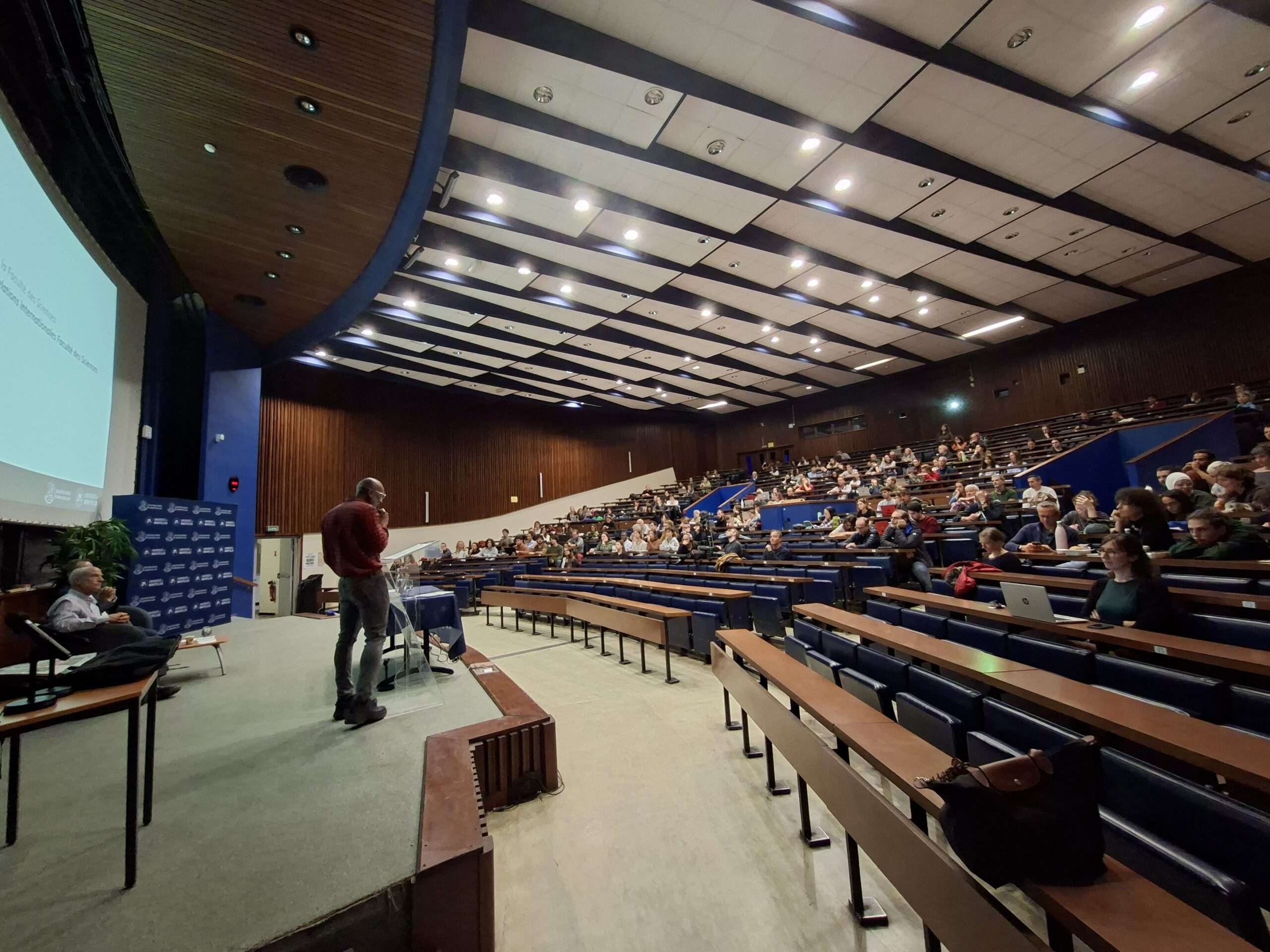
November 12 and 13: Lectures – Global Change by Peter Reich
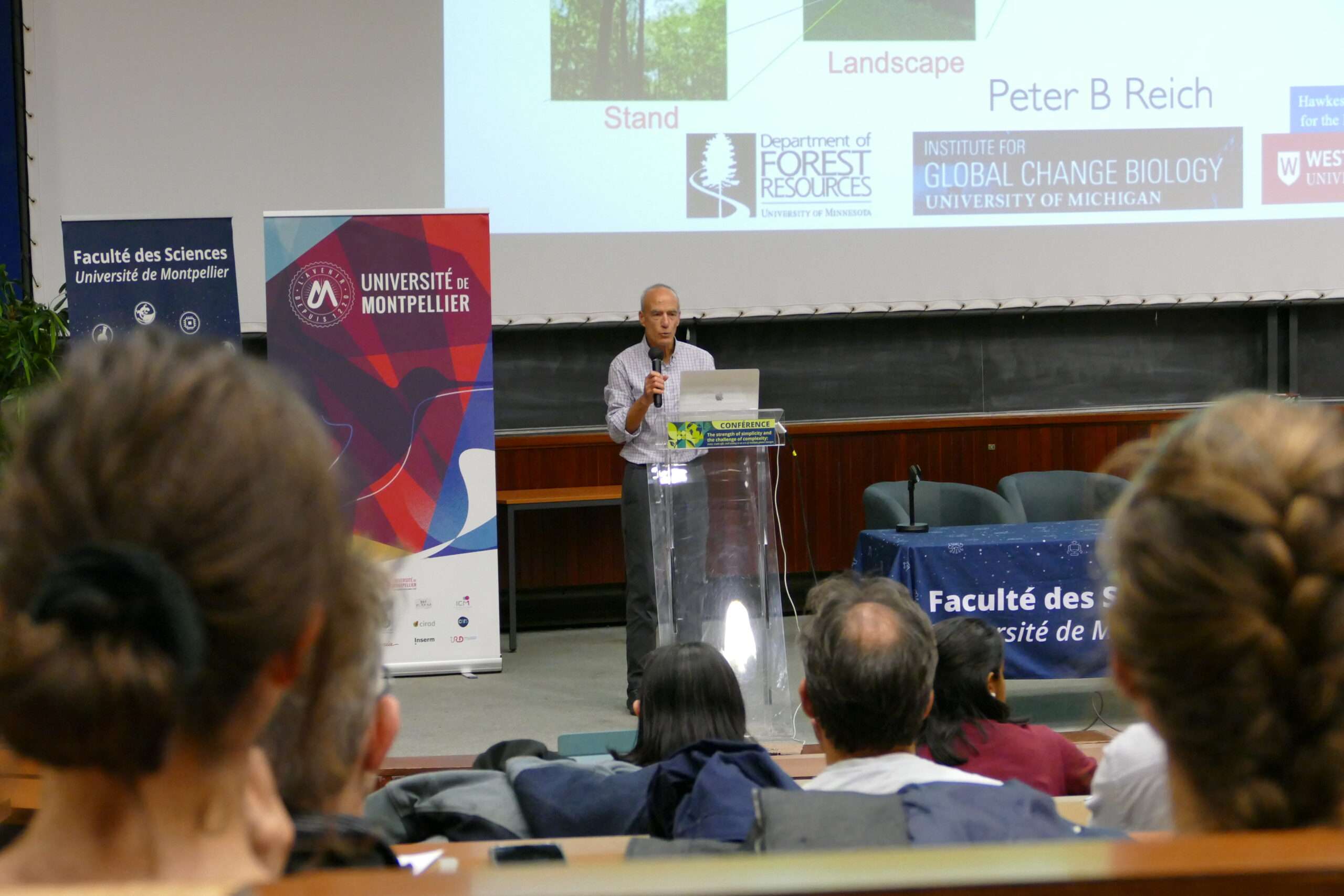
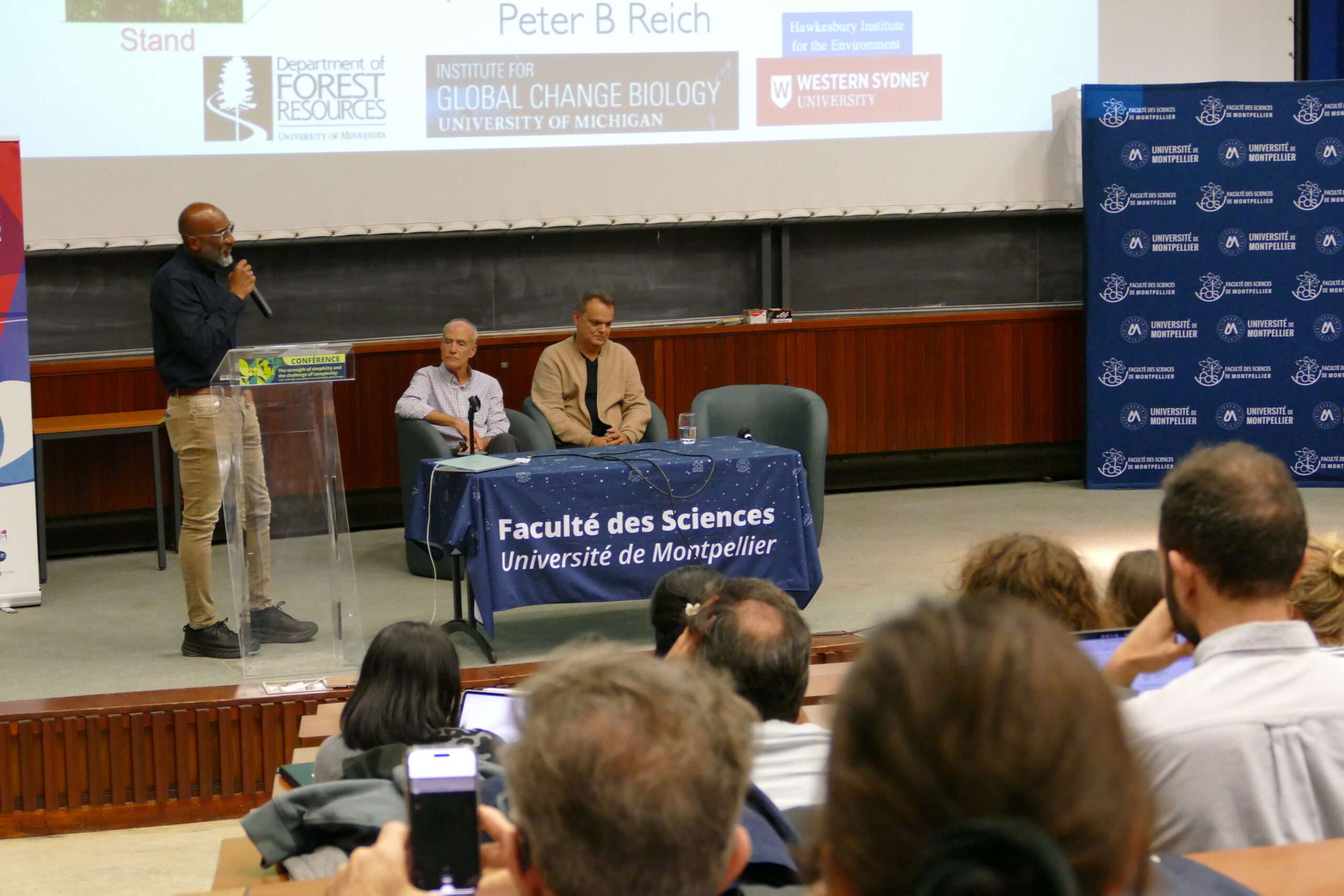
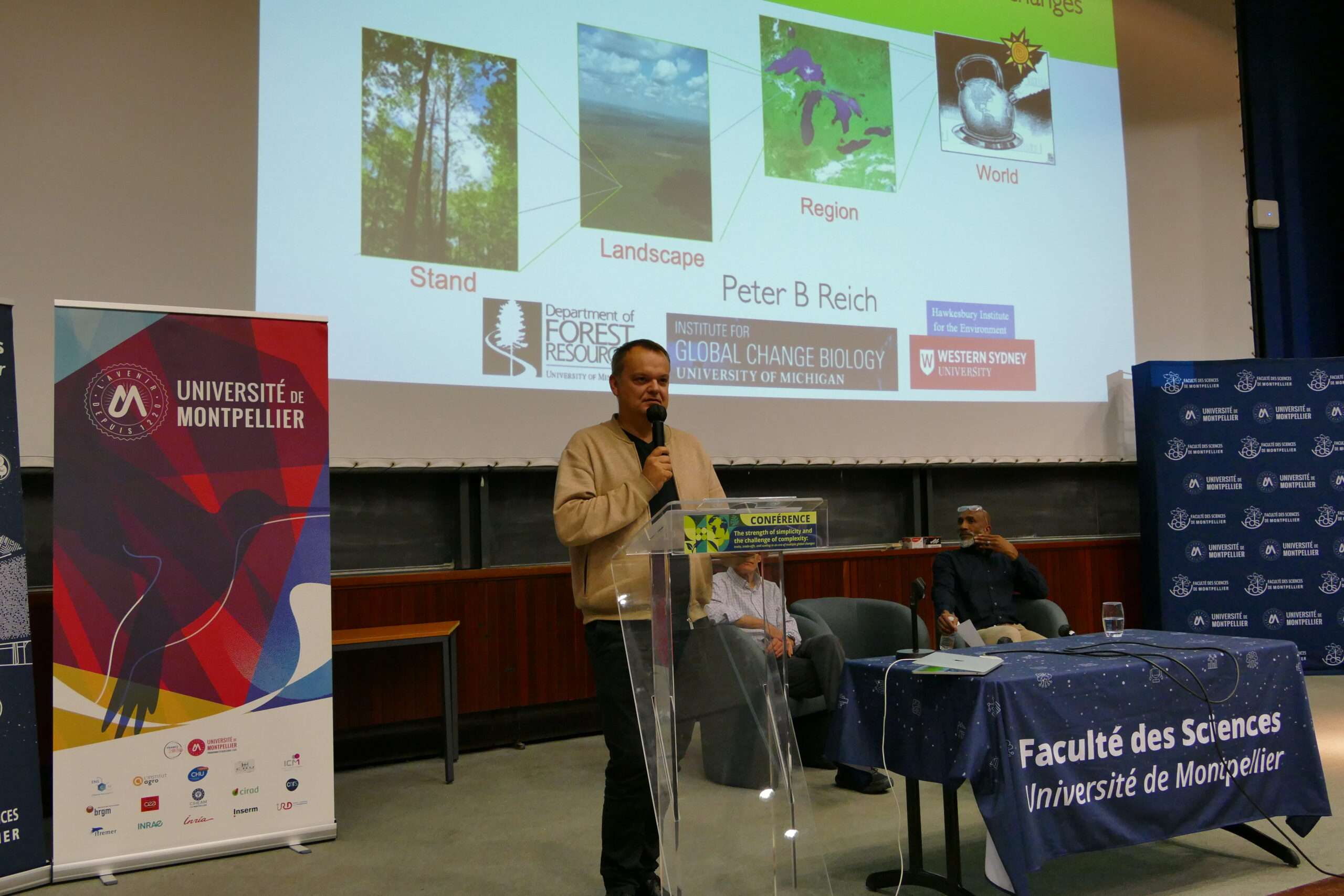
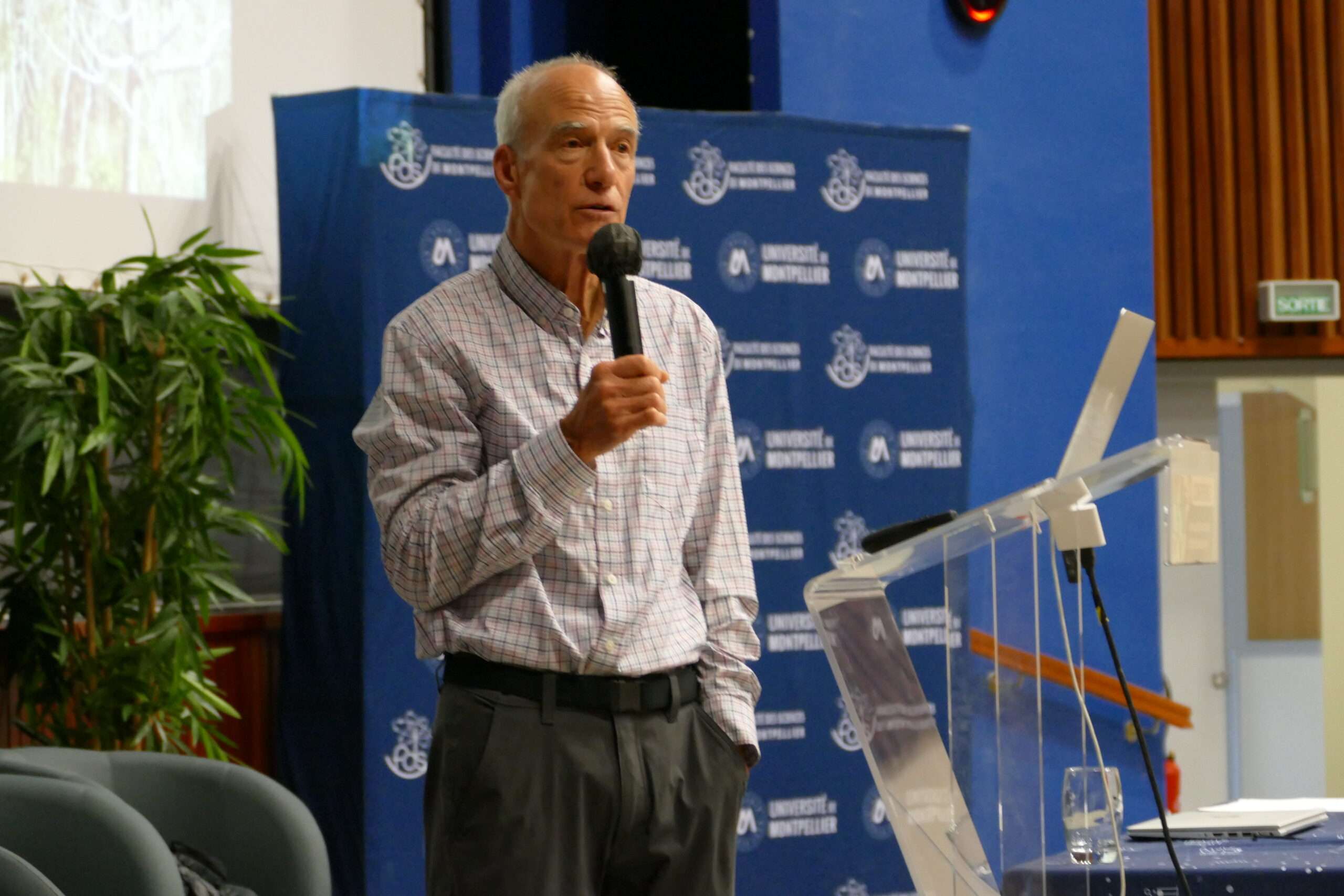
The Faculty of Sciences is pleased to welcome Peter B. Reich, a renowned expert in physiology and ecology. He will deliver two lectures, in English, on our campus on November 12 and 13, 2025, in the Dumontet Auditorium.
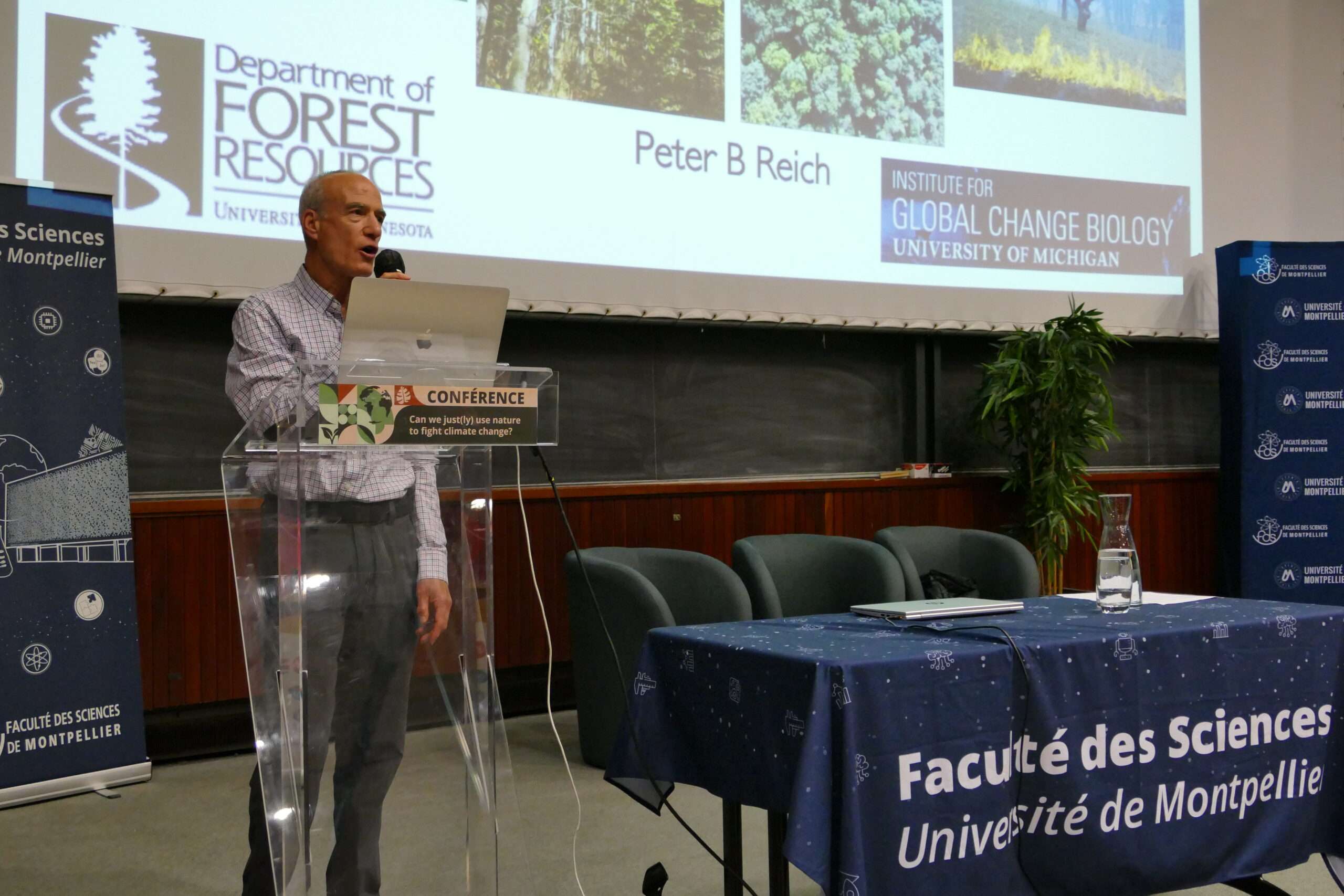
Peter B. Reich is director ofthe Institute for Global Change Biology at the University of Michigan and a professor in the Department of Forest Resources at the University of Minnesota.
He has conducted research on global changes affecting plants, soils, and ecosystems at various scales.
He also helped launch the science education channel MinuteEarth, which has amassed more than 500 million views on YouTube and other platforms.
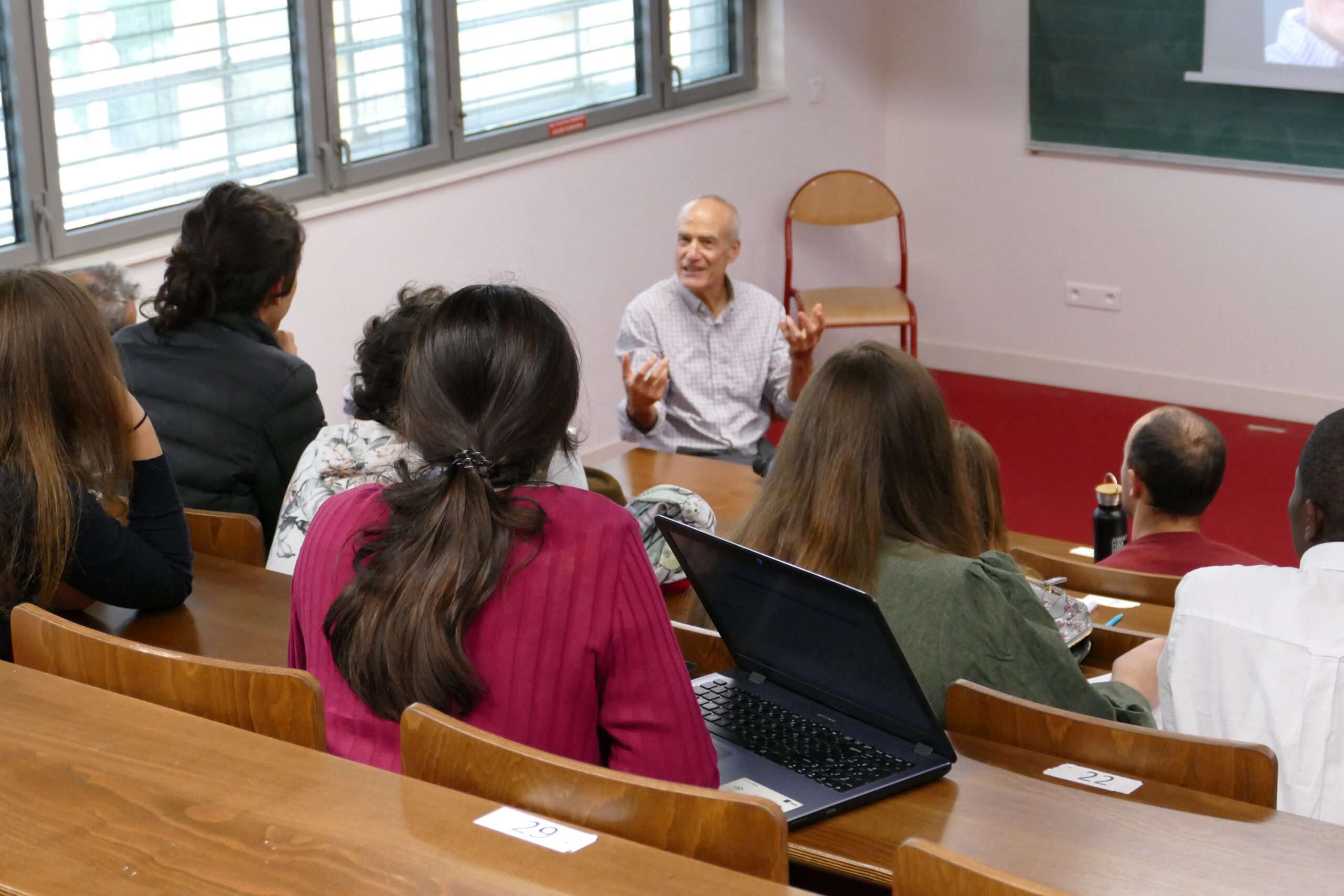
A roundtable discussion (registration required) will also be held on Wednesday, November 12, from 3:00 p.m. to 4:00 p.m. in Lecture Hall 36.05, followed by a coffee break.
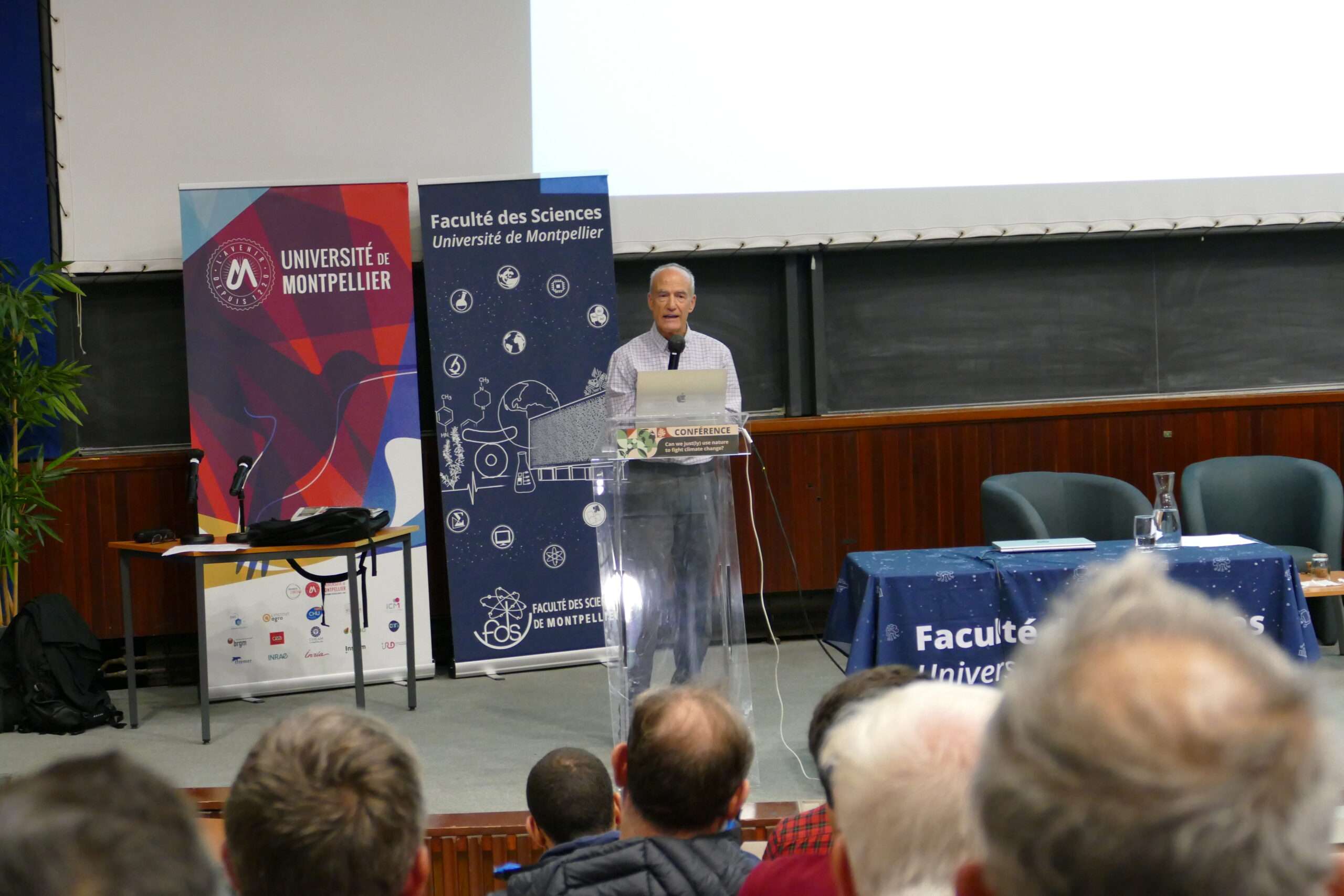
Conference: “Can We Justly Use Nature to Fight Climate Change?” – November 12, 2025
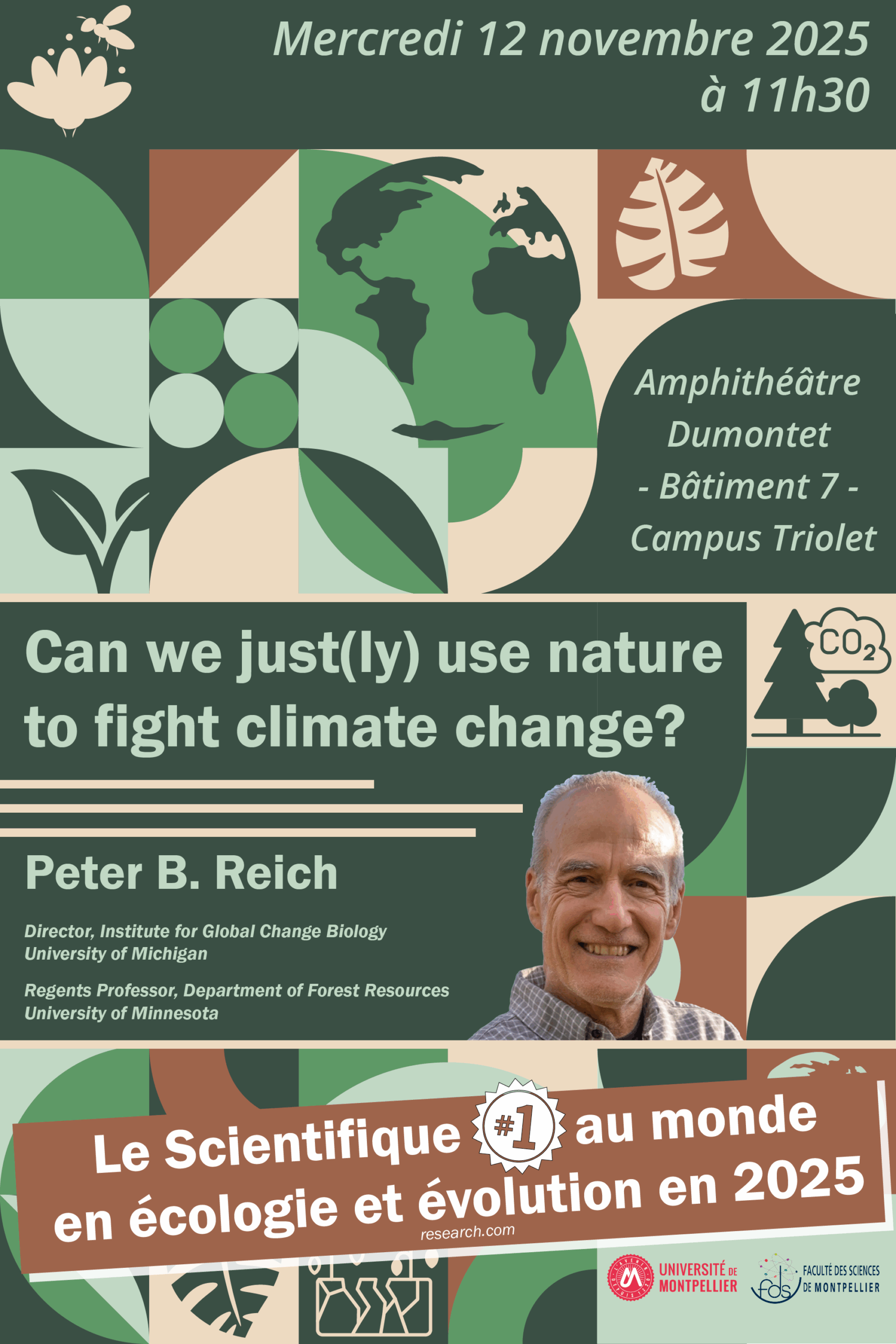
Conference Summary (in English): Can we justly use nature to combat climate change?
Terrestrial plants and soils store more than three times as much carbon as is found in the atmosphere, and at least 250 times as much carbon as is released each year from the burning of fossil fuels. Moreover, terrestrial ecosystems—such as forests, savannas, and grasslands—have already absorbed more than 25% of all theCO2 emissions we have released into the atmosphere over the past few centuries, and, together with the oceans, have slowed climate warming by more than half. This ecosystem service is, by its very nature, worth literally quadrillions of dollars, and is why terrestrial carbon sequestration is among the key mechanisms considered part of a strategy we can implement to slow and stop climate change.
So it’s no surprise that scientists, policymakers, and entrepreneurs all hope that by changing how and where we manage vegetation and soils, we can encourage nature to absorb much more atmospheric carbon and store it in plants and soils. A wide variety of nature-based solutions that could enhance carbon storage in forests, grasslands, or agricultural systems have been proposed—some of which also offer benefits for social justice and biodiversity (while others do not). Although the devil is always in the details, it is true that nature has substantial capacity to “store” more carbon and that biodiversity can contribute to this. For example, as I will explain during my talk, forests alone (excluding those converted to urban or agricultural use) could, in theory, store additional carbon equivalent to half the amount of carbon we will emit from burning fossil fuels over the next four to five decades. Savannas, grasslands, and agricultural lands could also store even more carbon.
However, figuring out how to make substantial use of these natural “tools” will be an enormous challenge, given the myriad political, economic, ecological, climate-related, social, and cultural barriers. Ignoring these hurdles means that any attempts to do so will be far less effective than they might otherwise be. And recognizing these hurdles does not diminish our need to harness nature as a tool to combat climate change. Instead, by facing the reality of our challenges, we could potentially make good use of nature’s capacity to clean up after us—once again. If we combine increased carbon sequestration and storage on land with decarbonization through improved energy efficiency, reliance on renewable energy, and electrification, we can slow and halt climate change (and save a boatload of money) by mid-century.
Justly and too late, yet just in time.
Lecture: “The Strength of Simplicity and the Challenge of Complexity,” November 13, 2025
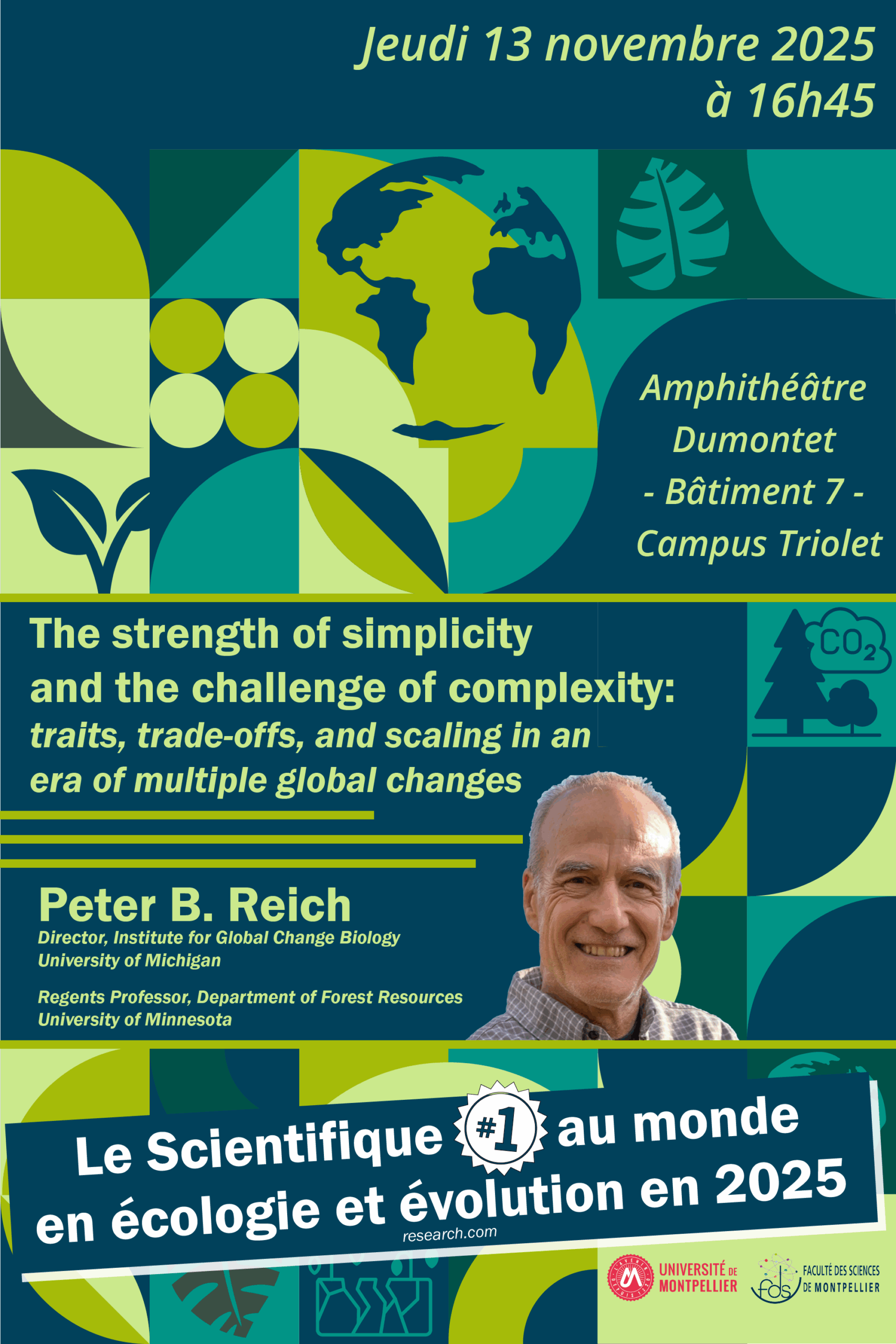
Conference Abstract (in English): The Strength of Simplicity and the Challenge of Complexity: Traits, Trade-offs, and Scaling in an Era of Multiple Global Changes
Understanding and managing nature is our collective challenge. Will ecosystems maintain their biodiversity and function in the face of global environmental change, and continue to sequester carbon and slow climate change? Can traits simplify the complexity of ecology enough for us to make sense of it in a predictable way? Addressing such questions is difficult for a single site—how can we generalize about and quantify such processes on regional and global scales?
Determining how diverse ecosystems will respond to multifactorial global change (climate change, land use, biodiversity loss, etc.) is difficult—due to uncertainty about the generality of behavior and scaling across taxa, ecosystems, and biomes; and a limited understanding of complex interactions, including plant-soil feedbacks. To help address these issues, I conduct research at scales ranging from the leaf to the globe and on topics ranging from ecophysiology to community assembly to biogeochemistry. This work ranges from identifying global trait trade-offs and metabolic response functions to ecosystem-scale experiments involving factors such asCO₂, temperature, rainfall, fire, and biodiversity, to cross-continental observations and Earth system modeling. Using examples from diverse ecosystems—including boreal forests, temperate grasslands, and tropical savannas—I will demonstrate how framing research around fundamental hypotheses about complex issues, and how these hypotheses scale across hierarchies, space, and time, can help uncover both predictable general patterns and unexpected surprises.
ROUNDTABLE – PETER REICH
Aroundtable discussion(registration required) will also be held on Wednesday, November 12, from 3:00 p.m. to 4:00 p.m. in Lecture Hall 36.05, followed by a coffee break.
A Look Back in Pictures