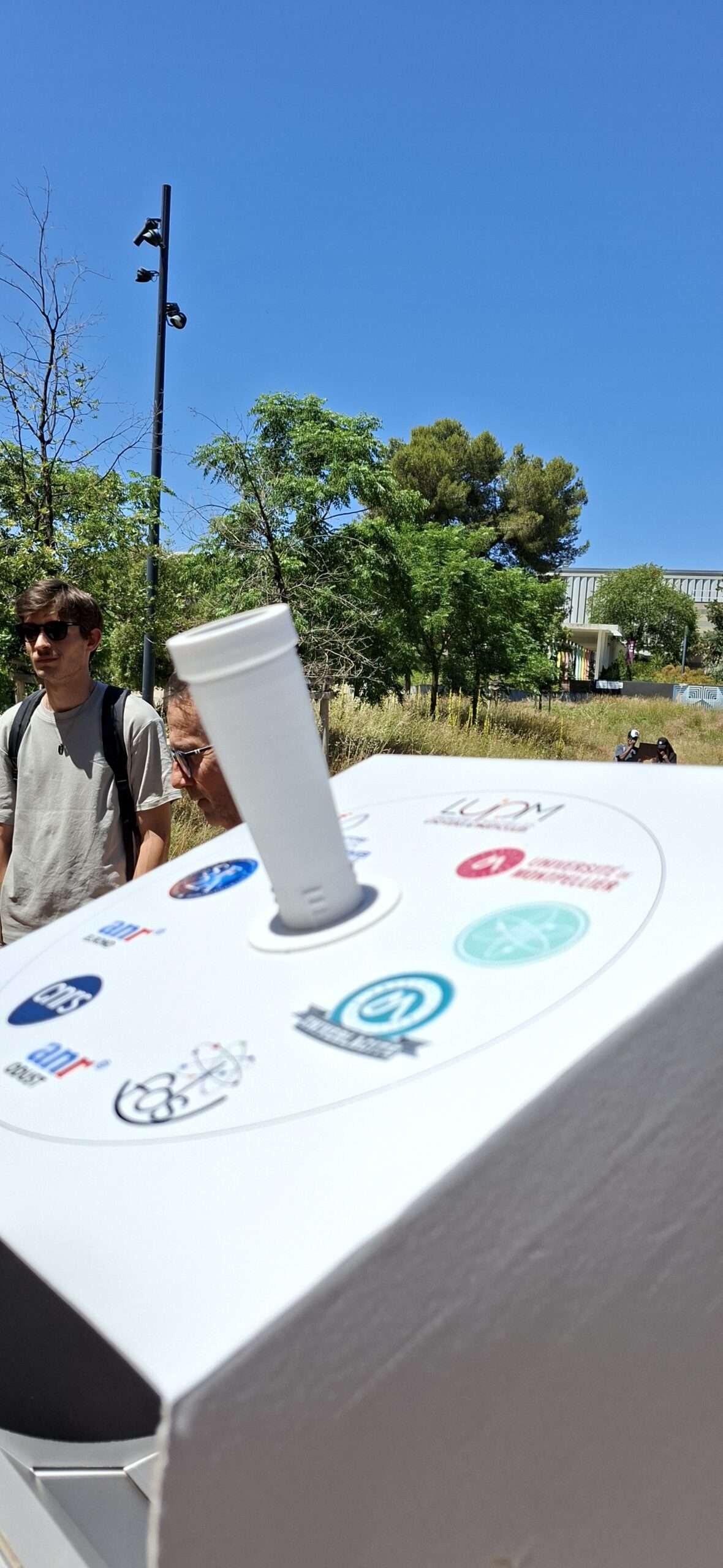
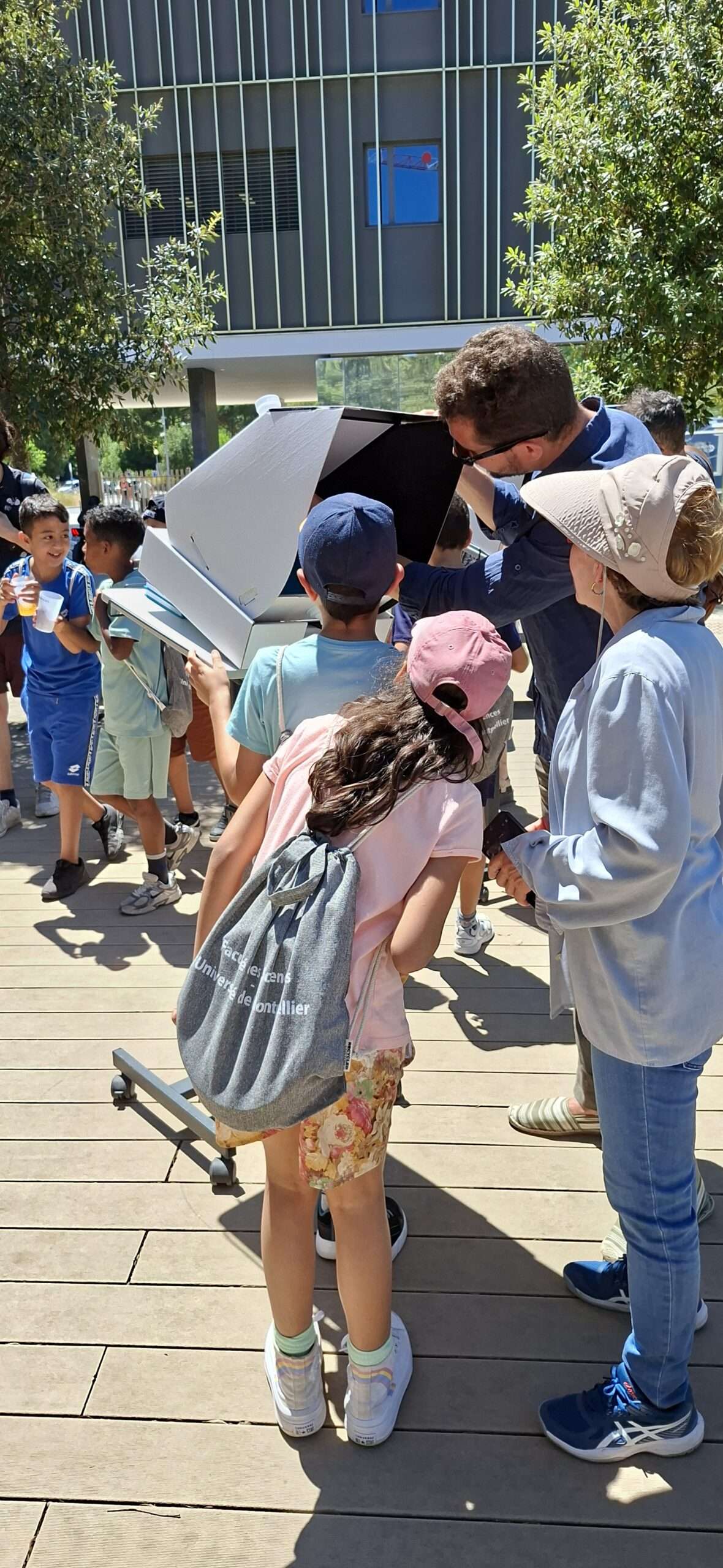
Young science educators are preparing for the solar eclipse on the Triolet campus
As the August 12 solar eclipse approached, the Triolet campus hosted an event that was as original as it was inspiring: elementary school students came to learn about the mysteries of the Sun and the Moon so that, for one day, they could become true science communicators to the general public.
A scientific immersion from a very young age
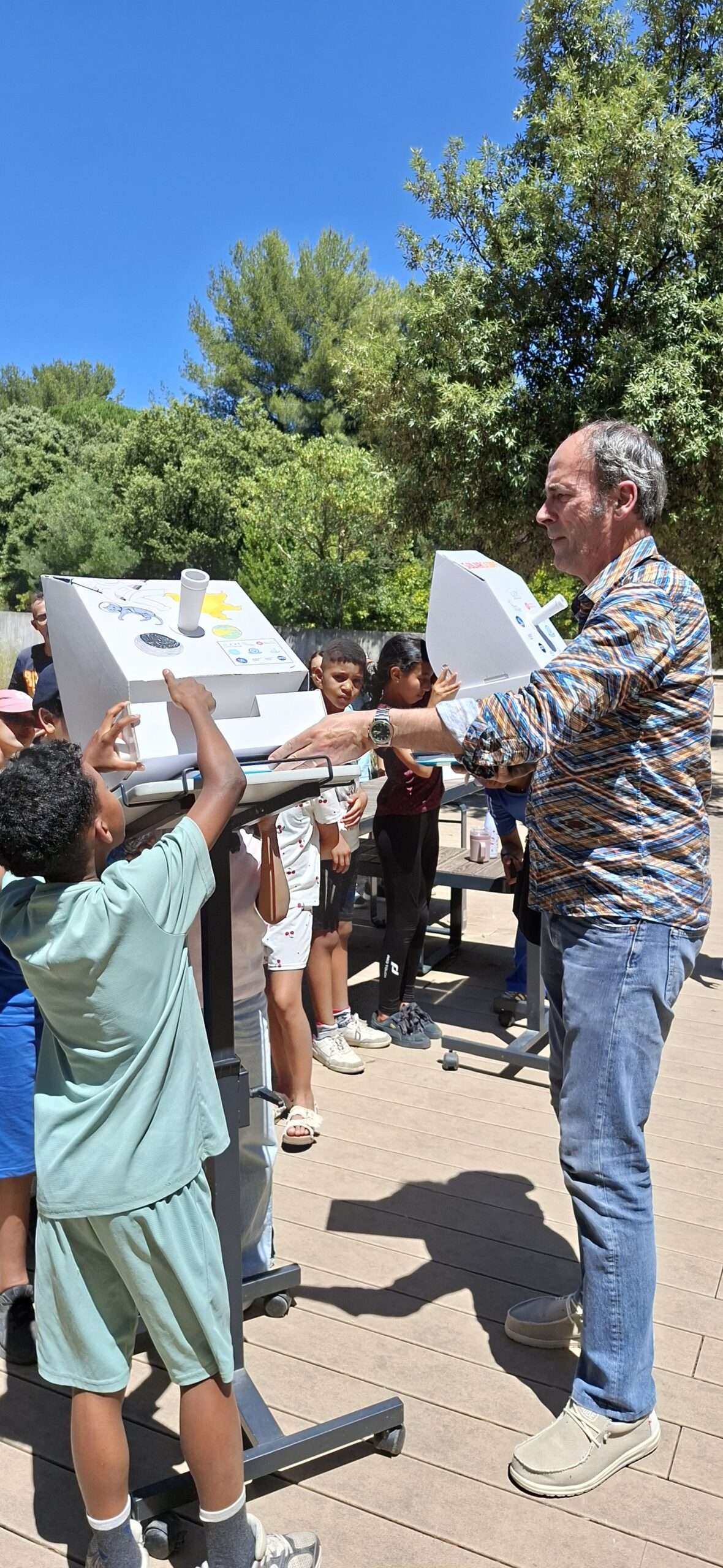
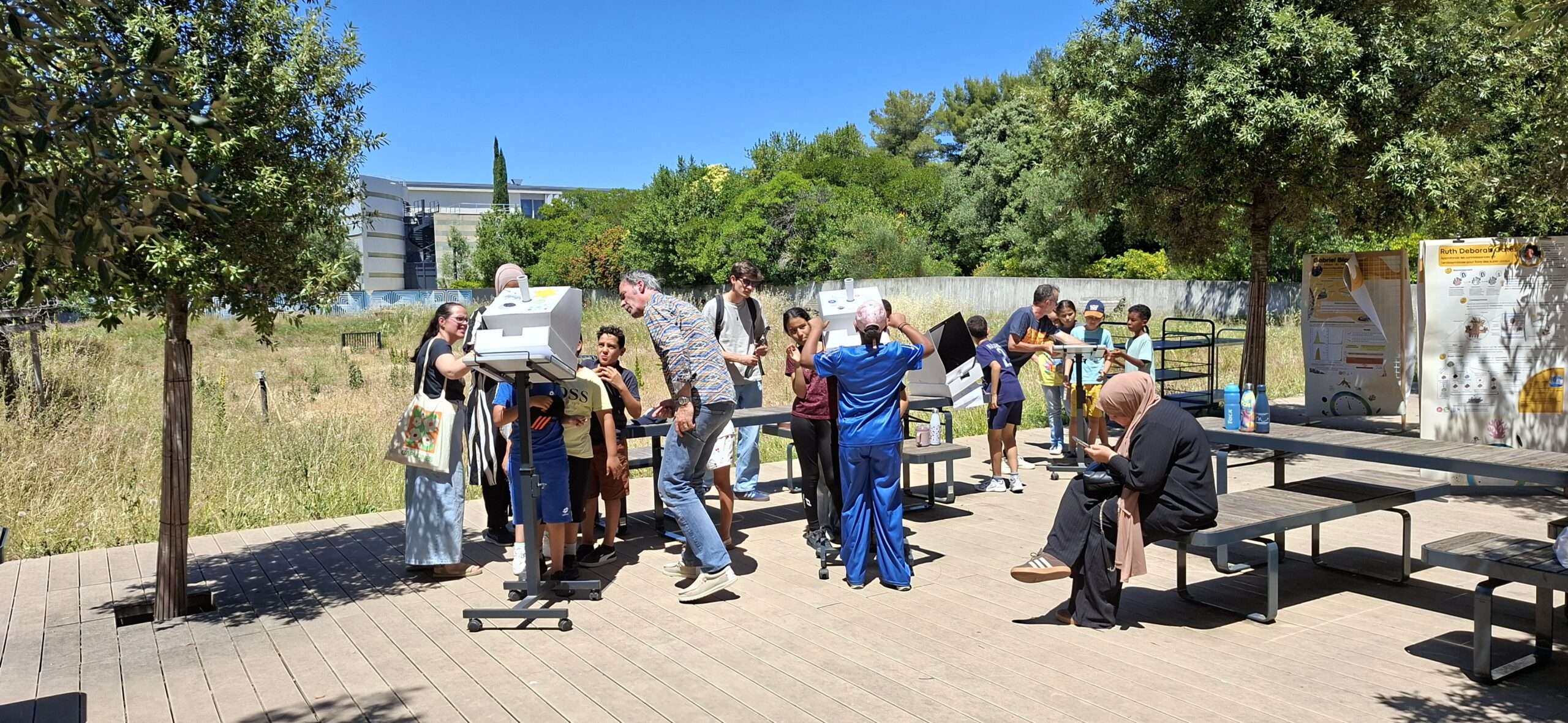
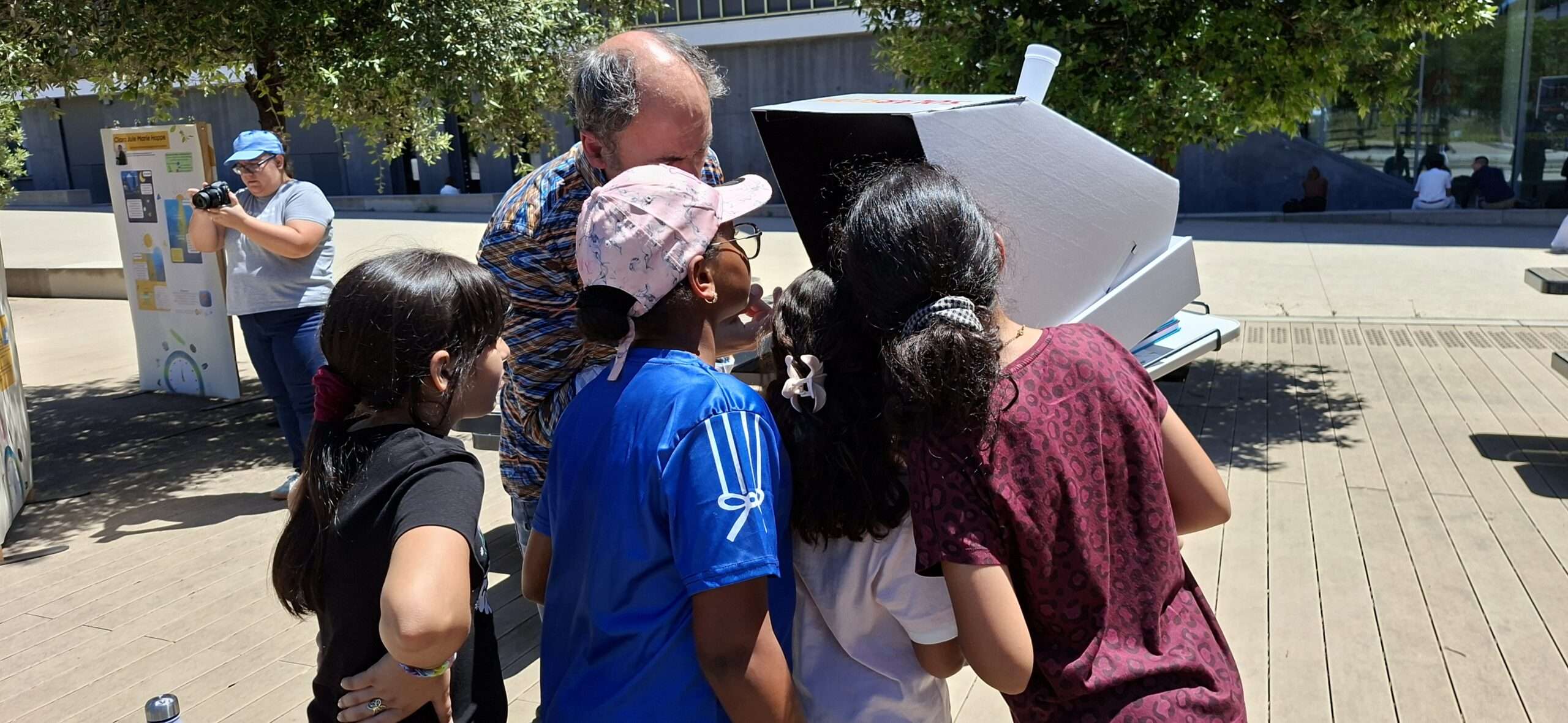
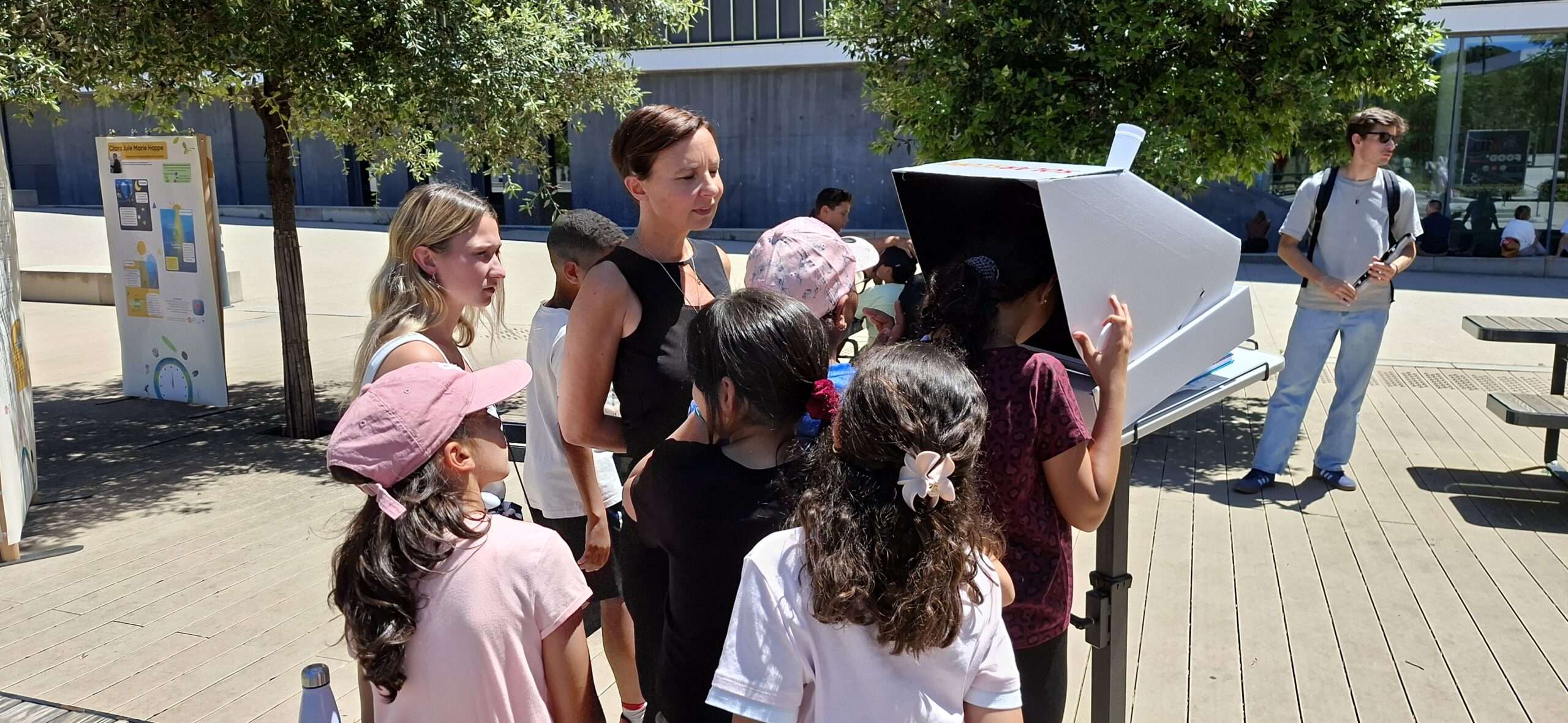
As soon as they arrived on campus, the students were immersed in a world dedicated to astronomy. Under the guidance of teachers and researchers, they participated in various educational workshops designed to explain the phenomenon of a solar eclipse: the role of celestial bodies, the conditions necessary for an eclipse to occur, and the precautions to take to observe it safely.
Hands-on activities, experiments, models, and interactive discussions made these concepts accessible and tangible. The goal was clear: to help the children understand so they could better share what they’d learned.
Becoming Mediators: Learning to Share
Beyond scientific discovery, the project is part of an effort to share knowledge. The students were trained to present their knowledge in a simple and engaging way so they could share it with the public during the eclipse.
In small groups, they practiced explaining what an eclipse is, answering questions, and guiding visitors as they observed the phenomenon. This role-playing exercise helped them gain confidence while developing their communication skills.
“Learning for yourself is different from learning to explain things to others,” notes one of the instructors. It’s an enriching experience that fosters curiosity and engagement among the youngest participants.
An event at the intersection of education and research
This initiative perfectly illustrates the connections between the worlds of research and education. By opening its doors to elementary school students, the School of Science helps make science more accessible and inspires students to pursue careers in science from a young age.
It also highlights the importance of science communication: making knowledge accessible to everyone, sparking interest, and fostering a collective understanding of natural phenomena.
See you on August 12, 2026
The highlight of this project will take place on August 12, 2026, the day of the solar eclipse. The students, acting as guides for the day, will welcome the public to share their knowledge and assist with observing this extraordinary event.
A wonderful example of experiential learning, where the youngest children take an active role in sharing knowledge.