Missions / Key Figures
MISSIONS
The Faculty of Sciences in Montpellier, a component of the University of Montpellier, has as its primary mission to offer students a comprehensive range of higher education programs in the field of science, including both undergraduate and continuing education programs.
It contributes to the ongoing missions of higher education as defined in Article L. 123-3 of the Education Code, namely:
- Initial and continuing education throughout one's life;
- Scientific and technological research, and the dissemination and application of its results for the benefit of society. This is based on the development of innovation, technology transfer where possible, the building of expertise, and support for associations and foundations recognized as serving the public interest, as well as for public policies designed to address societal challenges and social, economic, and sustainable development needs;
- Career guidance, social advancement, and job placement;
- The promotion of humanistic culture, particularly through the development of the humanities and social sciences, and of scientific, technical, and industrial culture;
- Participation in the development of the European Higher Education and Research Area;
- International cooperation.
The programs draw on the expertise of the University of Montpellier’s research laboratories, particularly those affiliated with the Faculty of Sciences.
The Faculty’s academic programs are closely aligned with the advancement of scientific research across all fields related to the basic and applied sciences: mathematics, computer science, mechanics, physics, chemistry, earth sciences, biology, and more—in collaboration with other French and international universities, local governments, and major national research organizations.
To fulfill this mission, the Faculty draws on the expertise of its faculty members and faculty-researchers, as well as its engineering, administrative, technical, social, and health staff (IATSS) and external experts from the professional world.
Social Report of the University of Montpellier
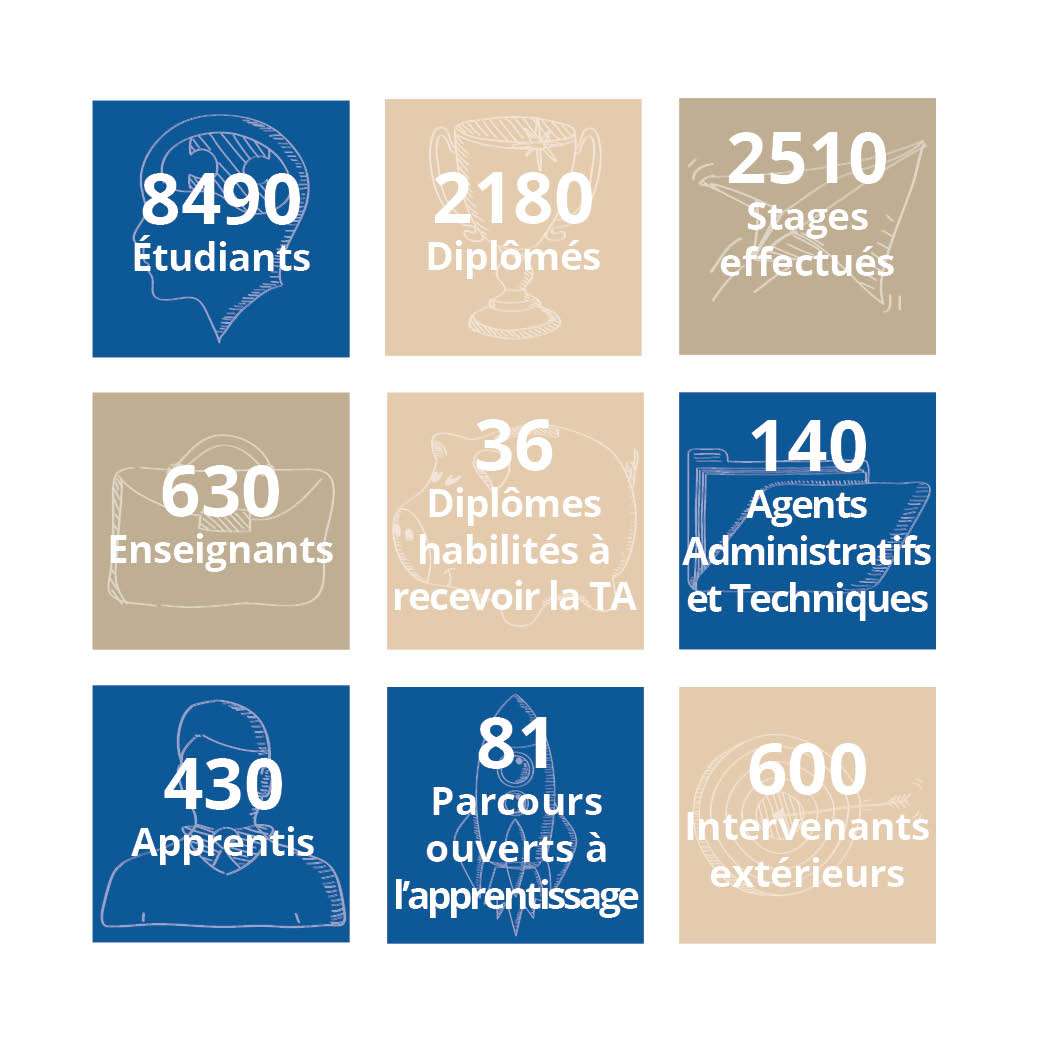
THE NUMBERS