In Nicolas Martin's laboratory
A lecture, a writing workshop, an interview; Nicolas Martin, author of the dystopian novel “Fragile/s,” met with students from the Faculty of Sciences at Montpellier for a unique exchange. Here’s a closer look at this event.
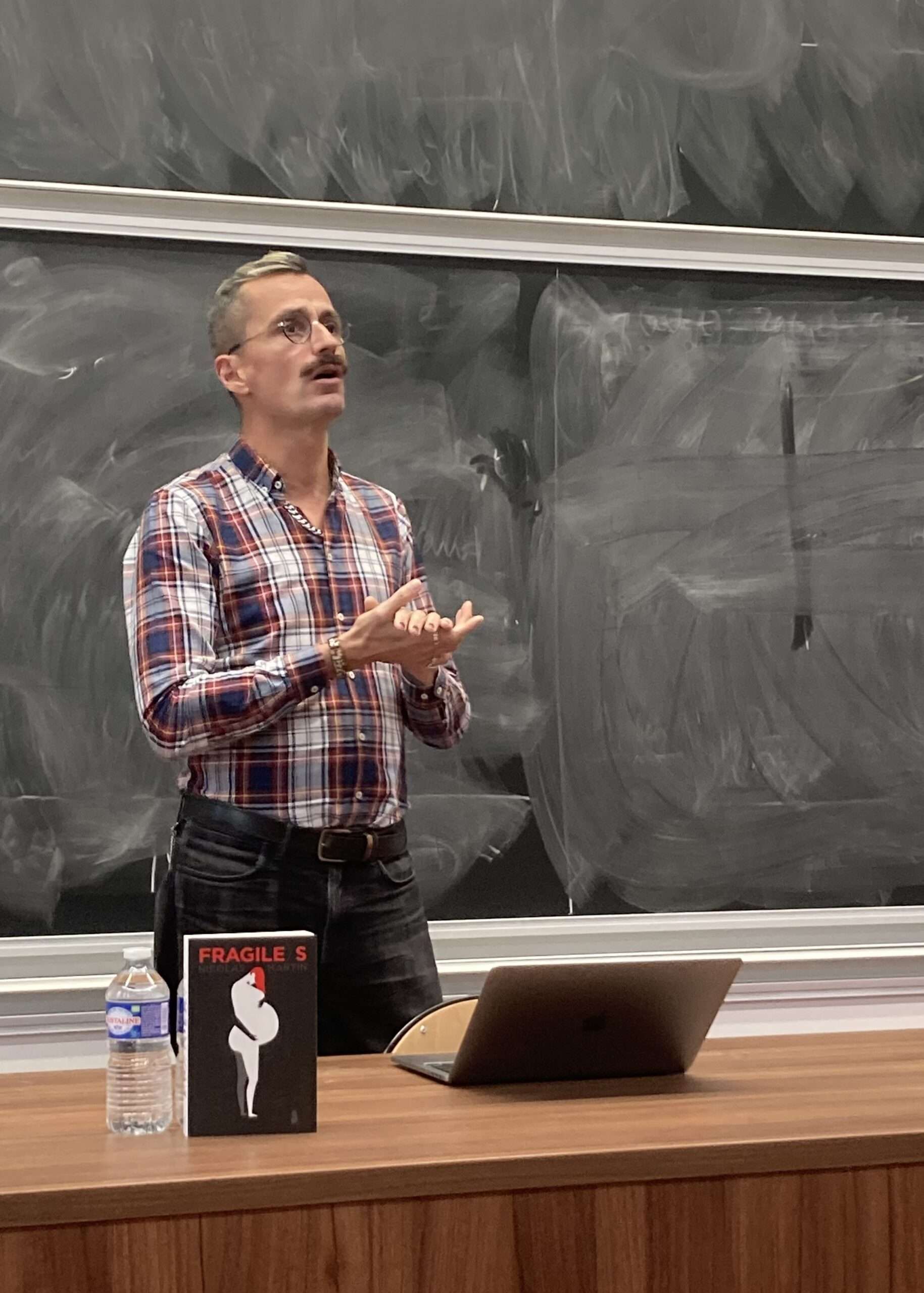
On Wednesday, December 4, the Faculty of Sciences at Montpellier had the honor of welcoming Nicolas Martin, a science journalist and former host of the program “La Méthode scientifique” on France Culture. Also a writer, he has just published his first science fiction novel, “Fragile/s,” with the publisher “Au Diable Vauvert.” This dystopian tale explores the challenges of human reproduction in the near future through well-known biological themes such as Y-chromosome degeneration and fragile X syndrome. Through a lecture and a writing workshop, the author invited students to reflect on this genre of speculative fiction, which is by no means a minor subgenre.
From Journalist to Writer
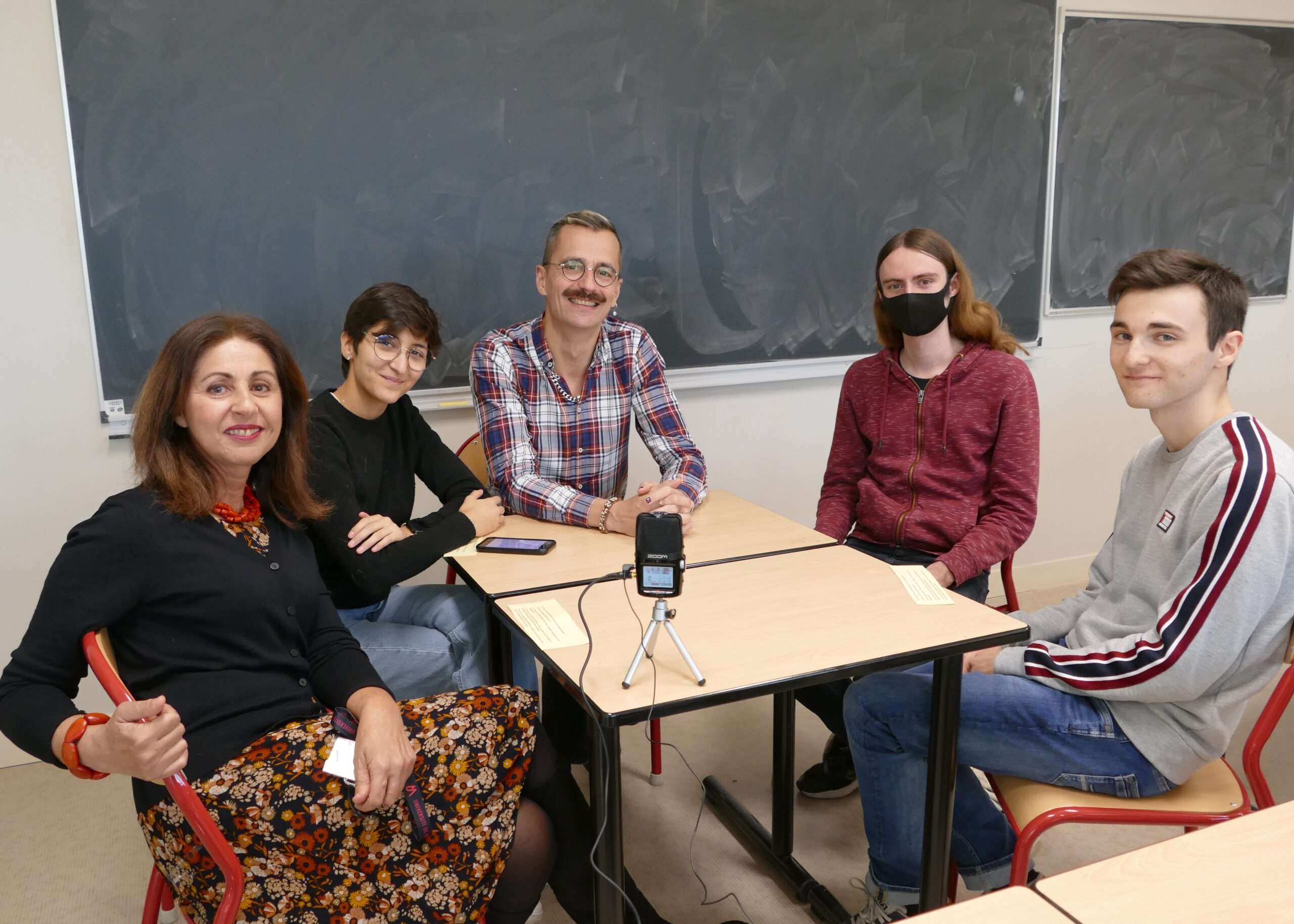
Writing has always come naturally to Nicolas Martin, who, from a very young age, has dreamed, imagined, doodled, and read works of fantasy literature. Writing predates his career as a science journalist and his passion for science. According to him, it was access to this world of imagination that sparked his curiosity. For over a quarter of an hour, three members of the SCRIBES association, along with Sonia Chalbi—Program Manager for Culture and Arts-Science Relations—had the opportunity to interview Nicolas Martin about the creation of “Fragile/s” and the connection between science and science fiction. How can we prevent dystopia from becoming reality? Is “science without conscience but the ruin of the soul”? Find the answers to these questions in the podcast of the interview posted on the Faculty of Sciences’ YouTube channel!
“There is a close connection between science and science fiction. […] When you’re immersed in the scientific world, it’s natural to see how literature draws inspiration from it, giving rise to new ideas and avenues for reflection.”
Science Fiction as a Testing Ground
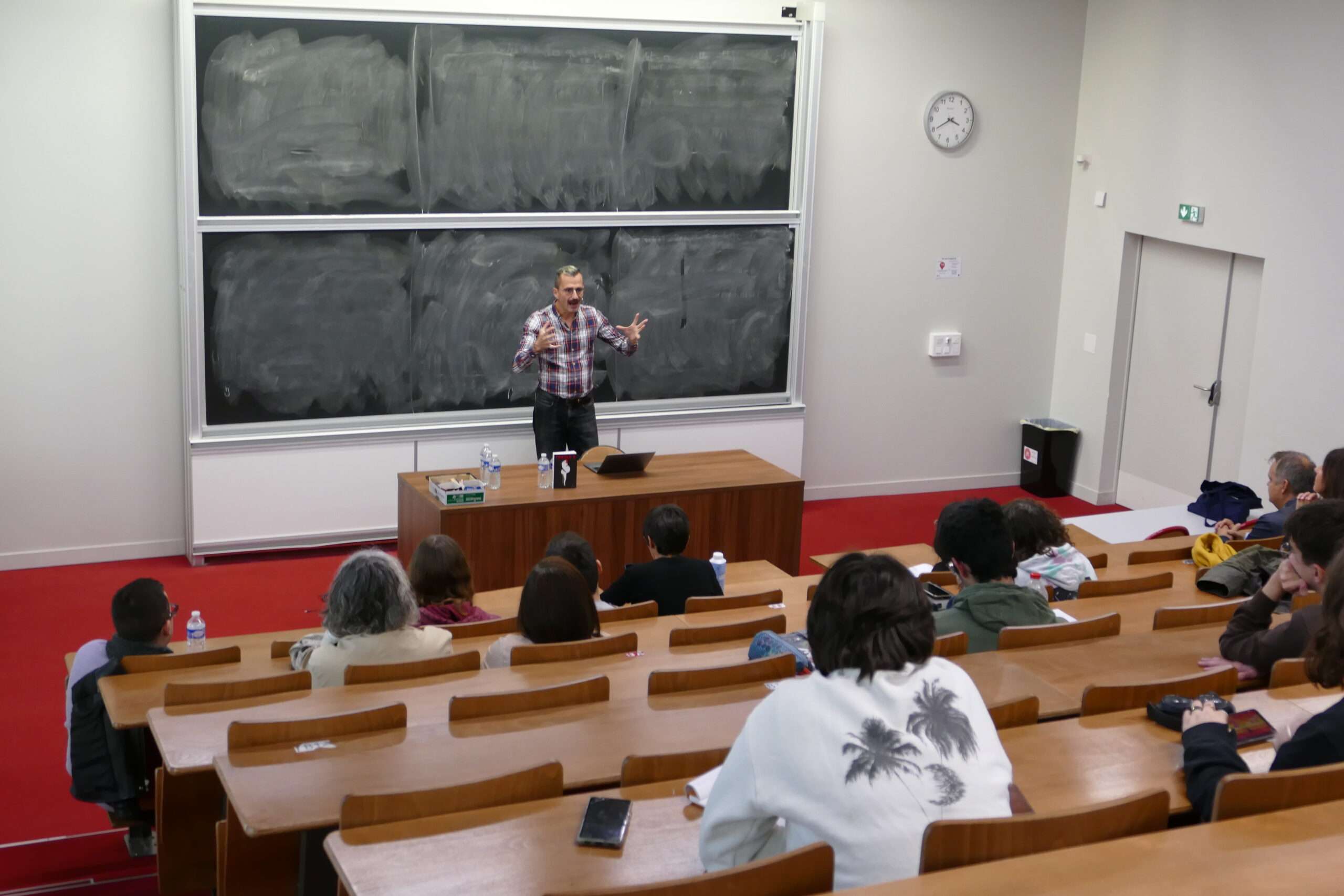
Nicolas Martin explored the origins and scope of science fiction in a fascinating, well-referenced lecture that lasted nearly an hour. “Frankenstein is the starting point of science fiction as we understand it today,” he explained, emphasizing that this genre, although officially recognized in 1926, has its roots in a much older tradition of speculative writing. Today, “writing science fiction in 2024 means starting from current reality and changing the parameters to see what happens.” This approach, akin to a philosophical thought experiment, transforms every work of science fiction into a space for reflection on contemporary challenges and possible futures.
A unique writing workshop
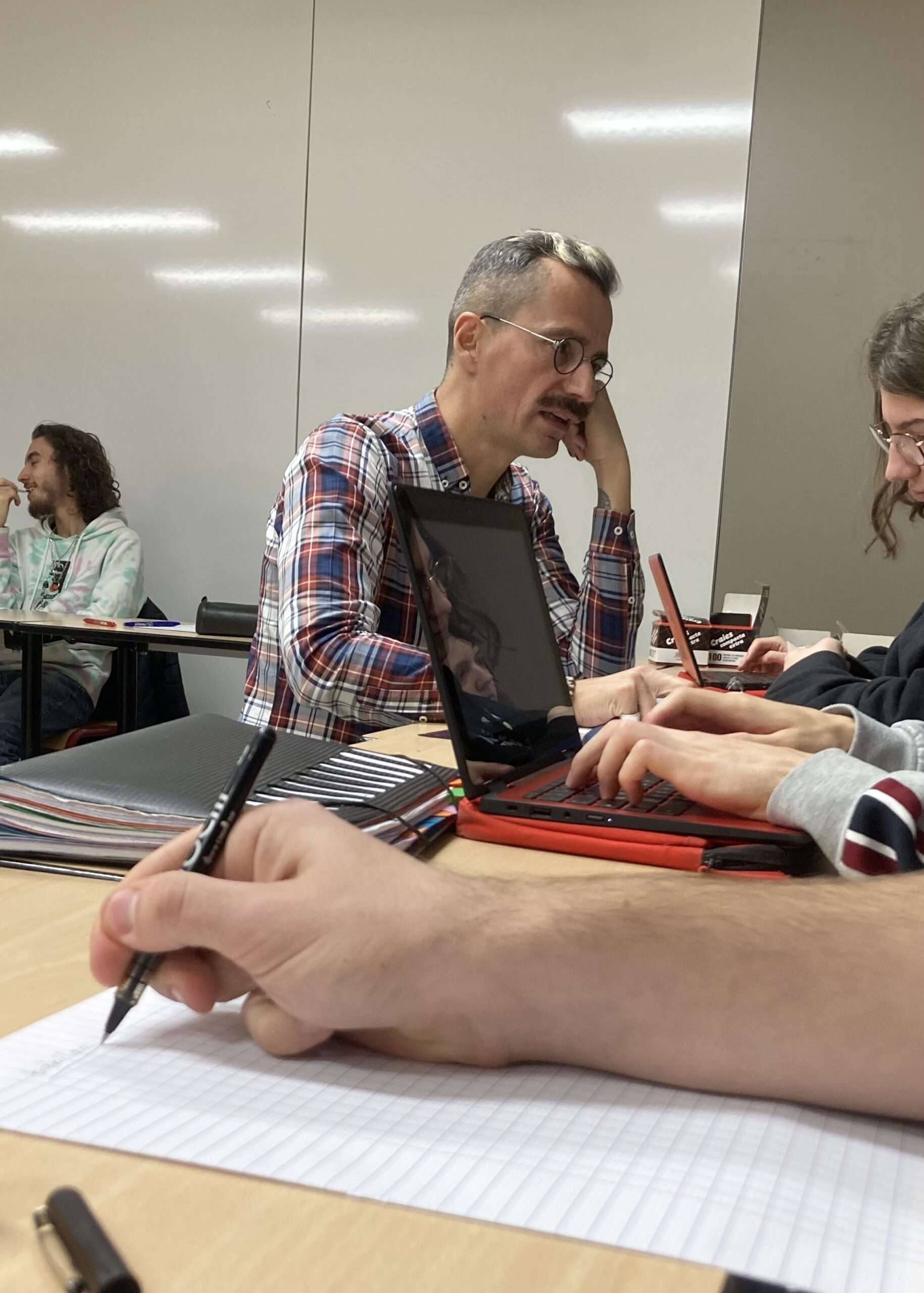
“Science fiction is similar to philosophy: you create a system and observe how it reacts.” It was with this perspective in mind that Nicolas Martin led a writing workshop for about fifteen students. Guided by his advice, they tried their hand at writing a science fiction short story. Perhaps the next George Orwell was among them?
By offering students an immersion in the world of science fiction, Nicolas Martin has demonstrated that literature can be a tool for navigating the complexities of our world. Through this event, a call to imagine, create, and experiment was issued. A call that, we hope, will continue to resonate well beyond this Festi’sciences. The SCRIBES association, which co-organized the project with the Montpellier Faculty of Sciences, will resume its writing workshops in January—a great opportunity to further explore the ideas already touched upon this Wednesday.
To follow S.C.R.I.B.E.S: Instagram @scribes_um
To follow Nicolas Martin: Instagram @nicomartinfc
Publisher: Instagram @editionsaudiablevauvert
Article written by Nafi Terrasse, a student in the MédiACCES master's program at the FdS