Proud of Our Students
The Chemistry Master's Program Team from the Faculty of Sciences Shines at the French Chemists' Tournament
What is the French Chemists' Tournament?
This is a competition in which seven institutions compete against each other (ENS, ENS Lyon, ENS Paris Saclay, École Polytechnique, Chimie ParisTech, ESPCI, and the University of Montpellier).
Seven enthusiastic and motivated teams competed on March 25 and 26, 2022, at Chimie ParisTech in a scientific debate competition. During these scientific debate marathons, the teams took on different roles, requiring students to take turns presenting findings, critiquing and debating another team’s work, or moderating a scientific debate.
In its first appearance, our team won the bronze medal, finishing ahead of prestigious institutions such as ENS Paris Saclay, École Polytechnique (X), ENS Lyon, and Chimie ParisTech.
One of our students, Bruna Rafaela Pereira-Resende, was also awarded the eloquence prize for best debater.
This result is the product of the outstanding work carried out by our team of students and faculty members, demonstrating the excellence of our chemistry programs within the College of Sciences
Codige Award

IESF – OM CODIGE 2020 AWARDS CEREMONY
VFriday, October 16, 2020, at 6:00 p.m. – Lecture Hall 36.01
IESF OM, in partnership with Codige, organizes an annual award to recognize the best internship reports.
This year, the first prize will be awarded to Clara Erard, a student in the Master’s program in Ecology and Biodiversity Management.
Each year, nearly1,000 master’s-level internships—conductedin France and abroad and lasting at least 6 months—are completed by students in the Faculty of Sciences.
This award comes with a check for 1,500 euros, which will be presented to the winner at the awards ceremony.
Winners are selectedbased on a review of theirend-of-study internship reports—for internships lasting at least 6 months—completed by the candidates at a company.
These internships may cover a variety of fields, such as life sciences, materials science, the biology and health sector, technology in general, economics, and management…
The selection process takes place in two stages: the director or president of each participating institution selects and submits two internship reports for Master’s 2 students, and then a jury composed of engineers, faculty members, scientists, and industry representatives makes the final selection and ranking of the successful candidates.
The evaluation criteria takeinto account the quality of the project, how well it fits into the company’s strategy, and the candidate’s mastery of the project. Also considered are the intern’s involvement in the company, their writing skills, and their effectiveness in communication. The innovative nature of the study and its results, as well as the quality of the connection between the analysis and the proposed actions, are all strengths that are also taken into account to highlight the scientific and technical value of the intern’s work.
TAF (Tropical Agroforestry) Project
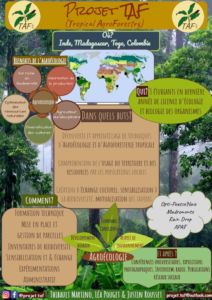 Who are we?
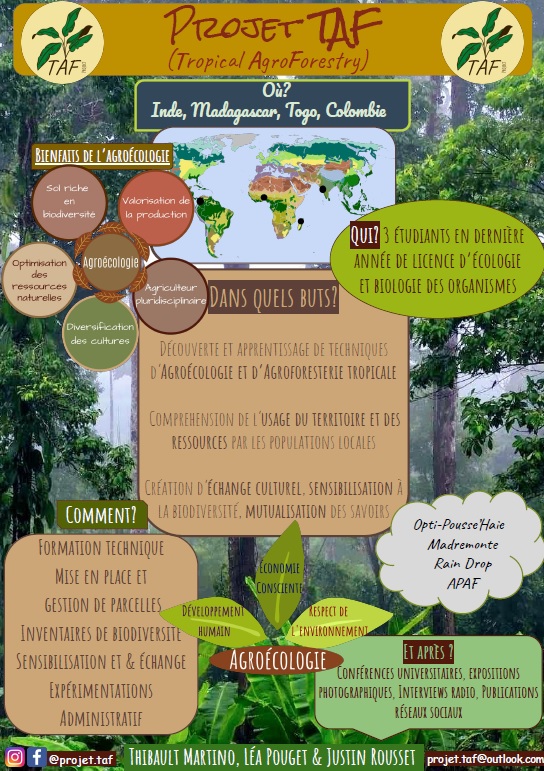
Thibault Martino (21), Justin Rousset (21), and Léa Pouget (22), three students in their final year of the Bio-Eco bachelor’s program at the Fds. All three of us plan to pursue a master’s degree in tropical plant ecology and/or agricultural systems, which will allow us to acquire new skills for our respective career paths.
=> Thibault plans to build his future by working alongside local communities to develop sustainable agriculture based on agroforestry and agroecology techniques.
=> Justin is interested in the management and conservation of tropical natural areas, a source of biodiversity essential to understanding ecosystems.
=> Léa would like to get involved in applied research aimed at striking a balance between biodiversity and community use of the forest.
Learn more about the entire project by clicking here!!!
A description of our project
Despite the pandemic, the world keeps moving forward, and our problems won’t solve themselves: our consumption patterns—particularly our relationship with food and its production—are an ecological and humanitarian disaster. They generate a significant impact of pollutants on biodiversity, disrupt the climate, and even affect our own health (UN 2017,Report of the Special Rapporteur on the Right to Food).This is a global issue, but it affects developing countries—and tropical countries in particular—even more acutely. Indeed, in these regions, the effects of our overproduction are felt more acutely, which has a significant impact on populations that are already economically vulnerable.
However, solutions do exist:
Agroecology and agroforestryare two agricultural methods thatallow for the coexistence ofpreserving biodiversity(and even utilizing the services it provides) andfood production, whileenabling farmers to diversify and secure their production. When combined witha fair economy, thiscangreatly improve farmers’ living conditions.
—————-
That iswhy the three of us—EBO students—have decided to spend next year immersing ourselves in real-world conditions on the ground to gain a true understanding of the actual ecosystem and socioeconomic challenges we face. We’ll do all this by applying the knowledge we’ve acquired—and, of course, our “hard work”—to help carry out environmental and community-based projects, with the goal of fostering a lasting exchange of technical and cultural knowledge between here and there.
The project will therefore run throughout the year in collaboration with four different “NGOs,” all of which are dedicated to improving the living conditions of local residents and addressing environmental issues (establishment and management of experimental plots, biodiversity surveys, etc.). It will take place in India, Madagascar, Togo, and Colombia in order to explore the three different tropical regions as well as the various technical and cultural approaches associated with each location.
The project will be carried out in collaboration with the University of Montpellier’sUniverlacité programto facilitate an exchange between young people from the countries visited and young people from Montpellier.
Upon the project's return, several conferences will be held, along with photography exhibitions documenting this journey.
If you'd like to learn more (and why not support us?), we invite you tovisit our Facebook page aswell as our Instagram page à@projet.taf.Pour.For more detailed information, please contact us atprojet.taf@outlook.fr.
Winner of the Grand Narbonne National Engineering Challenge
Antonin Arnaud, a student in the Department of Electronics, Electrical Engineering, and Automation (EEA) in the Faculty of Sciences, won first prize in the national engineering challenge last weekend.No fewer than 100 participants and 14 teams gathered at IN’ESS for the first hackathon to showcase the best innovation.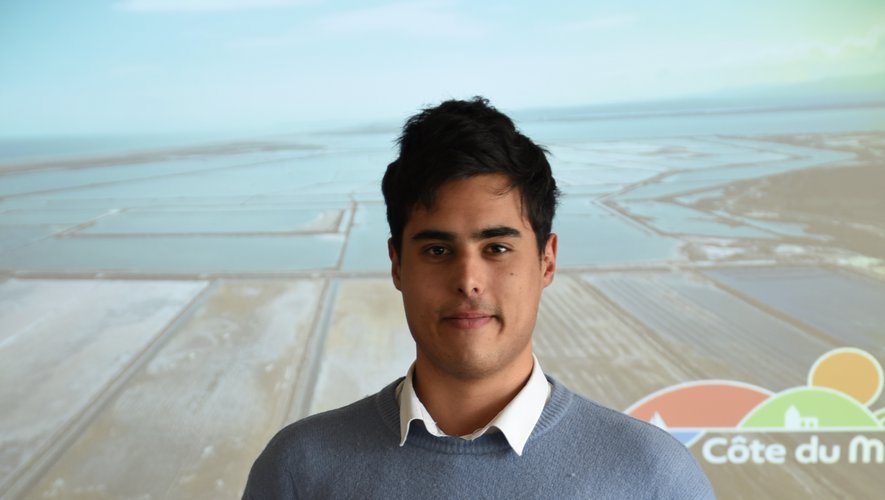 Antonin, who holds a pilot’s license, is developing an electronic solution to make it easier for airplanes to land, complementing existing solutions—particularly in the fields of light aviation and at small airfields. His team of three engineering students has provided him with essential insights into the technology to be used and the primary target audience. Shh! We can’t say any more, because a patent is about to be filed to protect his idea. A big congratulations, Antonin—you’re the pride of our Faculty!!!
Participation in the SWERC Competition

Julien Rodriguez, Guillaume Pérution, and Mattéo Delabre (from left to right)
On January 25 and 26, three students from the Master’s in Computer Science program at the Faculty of Sciences represented the University at the SWERC programming competition. After five hours of competition among the 100 participating teams, École Polytechnique emerged victorious, while the University of Montpellier finished in 45th place—a rise of 21 places compared to the previous year.
Hello Julien, Guillaume, and Mattéo, could you please introduce yourselves?
We are three friends who have been united by our passion for science and research ever since we met while pursuing our bachelor’s degrees in computer science. We are currently completing our master’s degrees in theoretical computer science at the FDS and plan to pursue doctoral studies next year.
How does the contest you entered work?
The SWERC(South Western European Regional Contest)is a computer science competition in which teams of students from across southwestern Europe have competed annually since 1995. During the five-hour contest, participants are presented with ten problems that they must solve by applying their knowledge of algorithms and programming.
What sets this competition apart is that each team has access to only one computer that is not connected to the Internet. In addition to the skills needed to solve problems, team members must therefore demonstrate strong organizational skills and teamwork to climb to the top of the leaderboard, despite the competition’s long duration.
What motivated you to enter this contest?
It’s been several years now since we first developed a passion for competitive programming, particularly through online contests such as those offered byCodeForces(http://codeforces.com/),CodinGame(https://www.codingame.com),and Battle Dev(https://battledev.blogdumoderateur.com/).
In addition to the “competitive” atmosphere that we enjoy, there are numerous educational benefits: preparing for the competition allows us to learn new algorithmic and programming techniques through hands-on practice and to hone our problem-solving skills. SWERC is also an excellent opportunity to meet other computer science students who share our passions.
Was this your first time participating?
The first team representing the university, formed in 2017 at the initiative of our friend Nabil Kherraf, already included Mattéo. Since last year, our trio has taken over. Each time we’ve participated, it has been a memorable and very rewarding experience for us. Over the course of these editions of the competition, we’ve managed to climb from 70th place in 2017 to 45th this year, and we hope that the team that succeeds us in 2020 will do even better.
So you won't be participating next year?
We would have loved to enter again, but the competition is open only to undergraduate and graduate students, so we’ll have to step aside. This is a great opportunity to invite anyone interested in participating in next year’s competition to contact us right away! We’re currently putting together the team or teams that will represent the university next year.
When will the next event take place?
Registration typically begins in September, and the competition takes place in December. Details will be posted in due course on the SWERC website (https://swerc.eu).
You can contact us by email at the following addresses:
- guillaume.perution@etu.umontpellier.fr
- julien.rodriguez@etu.umontpellier.fr
- matteo.delabre@etu.umontpellier.fr
Check out the photos and video from the event:
— https://swerc.eu/2019/gallery/
— https://www.youtube.com/watch?v=Aa0_qJBk8ek
From Studies at the FdS to the Working World: Department of Physics
Becoming an Engineer After Earning a Bachelor’s Degree in Physics and Chemistry / Mathilde Breuil, a former Physics and Chemistry student at the FdS, shares her journey …
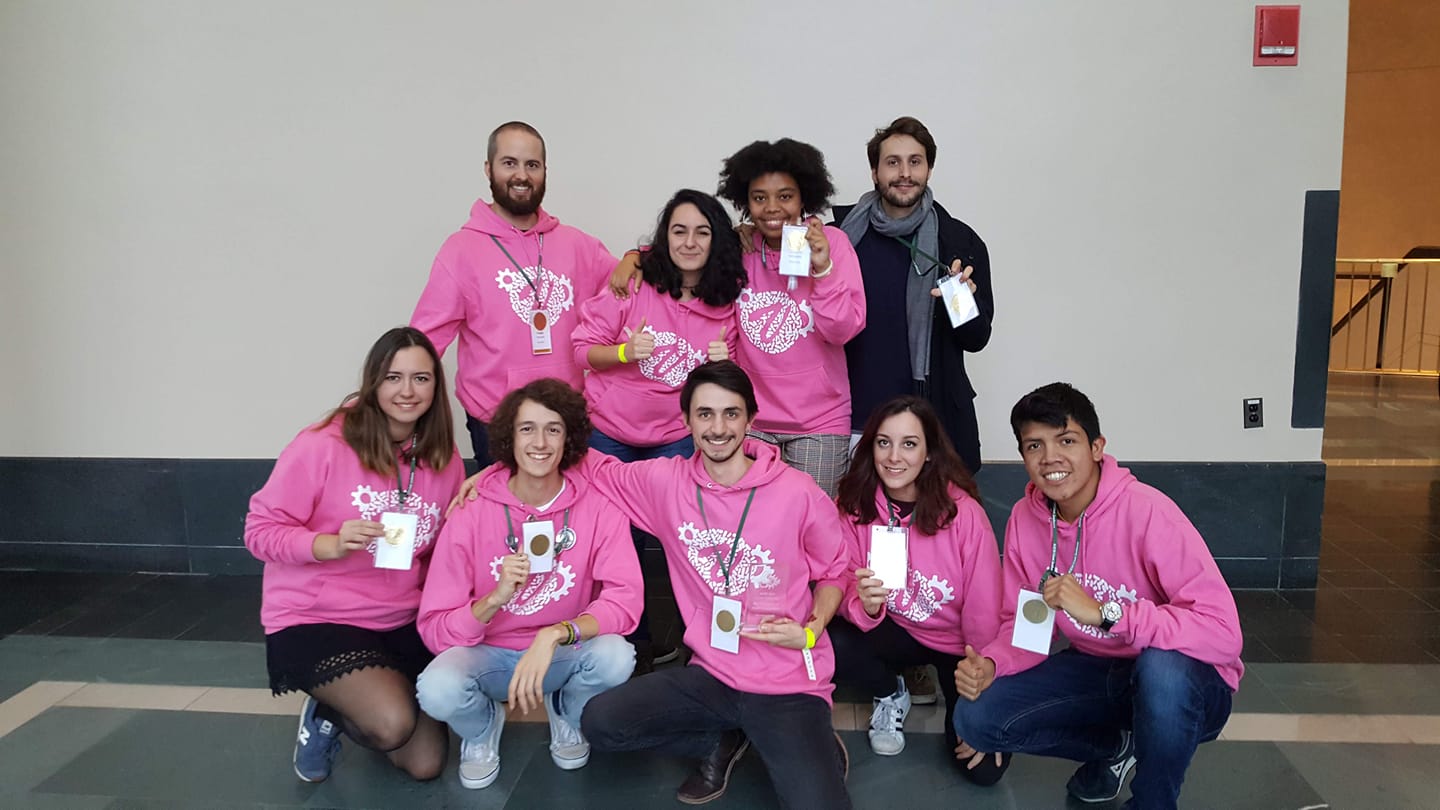
UM in Antarctica with GreenpeaceVagineering: On the Way to MIT
Recipients of the Jiyuu Hugo Sarrade Scholarship